Showing posts with label Progressive Rock. Show all posts

Sunday, 28 August 2022

Harry Roesli - 1976 - Titik Api


Harry Roesli - 1976 - Titik Api


One of the most brilliant and original characters on the Indonesian scene, Djauhar Zaharsjah Fachruddin Roesli, better known as Harry Roesli, will make an infinite number of albums in the second half of the seventies that earn him the deserved epithet of Frank Zappa of Indonesia. More than in the music itself, the similarities between these two great artists can be found in the overwhelming creativity and originality and in the sarcastic approach in the lyrics and music. Among indonesian artists  Harry is one of the most authentically Indonesian and his music is the one that pays less debt with the West. This is why he could also be the most difficult artist to assimilate.

Roesli debut in 1973 with the release of the first and only Philosophy Gang record, a seminal record for the development of Indonesian prog but quite immature and which still paid debt to Western music. After the Philosophy Gang chapter, Harry begins a very long solo career, a bit discontinuous, but in which he will reach peaks of absolute excellence.


First, in 1973 he founded the Ken Arok theater company, carrying the musical work of the same name around until 1975, when he disbanded the company to go to Holland to study composition at the Rotterdam Conservatory. In 1976 the album "Ken Arok" was released, testimony of the homonymous musical work and manifesto of the poetics that will characterize his subsequent production. "Ken Arok" definitely breaks with the previous album, it is a real rock opera in Indonesian sauce. Elements of the Indonesian tradition begin to make their way into Roesli's music. Although still a little bit unripe, the result is surprising!


With the subsequent "Titik Api", in 1976, the definitive turning point takes place, Harry almost completely abandons Western stylistic features and begins an experiment in an attempt to blend traditional Indonesian pentatonic music with Western diatonic music (an approach that will be taken in ways other than Gurh Gipsy). Roesli and his band wonderfully combine Indonesian traditional music and their instruments with classic rock instruments: bass, guitars, drums and keyboards. In particular, the latter and how they naturally blend with the dynamics of gamelan, are the hallmark of the Indonesian artist's music. Older brother of "Ken Arok", the album "Titik Api" sublimates Roesli's poetics and becomes the absolute pinnacle of his discography and Indonesian prog in general. In “Titik Api”, unlike almost all the Indonesian prog albums of the period, there is no trace of bands like Genesis, Yes, Uriah Heep, Pink Floyd or other English prog groups; Roesli defines his style in a unique and original way as no one else has ever succeeded and will succeed in the musical panorama of the archipelago!

In addition to these two works, between '76 and '79, Harry will release an infinite number of albums: "Gadis Plastik" and "Tiga Bendera" ('77), "Jika Hari Tak Berangin", "Daun", "Ode To Ode "and" LTO "in '78 and" Kota Gelap "in '79. In addition, the two records resulting from the collaboration with the vocal ensemble Kharisma.

With "Tigra Bendera" we return a little more to Western music, but the result is still great. There are now references to Pink Floyd, Santana, ELP and especially Gentle Giant, with extensive use of the typical counterpoint of the English band. The following "Gadis Plastik" is a little less progressive and a little more pop, with funk and bluesy streaks, the latter due to the harmonica of his faithful collaborator Harry Pochang (former member of the Philosophy Gang). The 1978 records, albeit inferior, present interesting ideas, continuing along the lines of “Gadis Plastik”. An exception is the splendid EP "Daun" which is certainly the most progressive and not surprisingly published by SM. Between '77 and '78 the two collaborations with the vocal ensemble Kharisma (in which a very young Fariz RM also participates in the drums) also stand out, discs always poised between melodic and more experimental solutions and where in some points involuntarily recalling also the Magma. In particular, the second shows us the most experimental and ingenious Roesli that we had left in Titik Api and Ken Arok.

To close the golden cycle is "Kota Gelap", a disc, not exceptional, with more hard rock ideas that closes the most creative and prolific period of the Frank Zappa discography of Indonesia. He then definitively concentrated on his studies, returning to the land of Holland. He will then work for soundtracks, will engage politically and disseminate Indonesian music, but will no longer produce works up to this period. 

(http://www.arlequins.it/pagine/articoli/corporetro.asp?chi=78)


TRACKLIST:

A1 Sekar Jepun
A2 Merak
A3 Jangga Wareng
A4 Kebo Jiro
A5 Epilog
B1 Prolog
B2 Curah Hujan
B3 Dinding Tulang
B4 Semut
B5 Bunga Surga
B6 Lembe-Lembe
B7 Epilog

Credits:

Bass Guitar – Imang Wandi
Choir [Sinden Pengiring] – Etna (11), Kania, Lenny, Nike
Drums, Percussion – C. Rivet
Fiddle [Rebab] – Bapak Yoyo (track: A3)
Gong [Go'ong] – Entis
Harmonica, Acoustic Guitar, Percussion – Harry Potjang
Keyboards – Yohan Verplak
Keyboards, Electric Piano – Elva Hasbullah* (tracce: B4), Indra Rivai (track: B5)
Lead Guitar, Backing Vocals – Albert Warnerin
Lead Vocals, Lyrics By, Guitar, Keyboards – Harry Roesli
Other – Didi, Dudu, Susan Hobert
Trumpet [Tarompet Penca] – Iri Sutisna (track: A4)


Wednesday, 1 June 2022

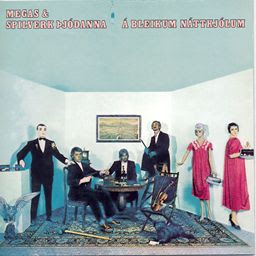
Megas & Spilverk Þjóðanna - 1977 - Á bleikum náttkjólum

 Megas & Spilverk Þjóðanna. - 1977 - Á bleikum náttkjólum


Cult character of the icelandic rock scene, in 1977 Megas realized this album together with folk rock band of  Spilverk Þjóðanna . The clumsy and croaking voice of Megas and the sophisticated and complex music of  Spilverk Þjóðanna fit very well togherdriving the music in an special limbo between, folk, punk, jazz rock and progressive rock. This album was voted the best Icelandic album ever made, overcoming "Debut" from Bjork and Sigur Ros "Ágætis byrjun".

By the end of the seventies, Megas was perceived as a provocateur and his important role in the Icelandic rock scene turned him into a reference for future artists. He then released a children's song album and a double live album and withdrew from the Icelandic music and started working as a dock worker and graduated from arts school.
By 1983 reappeared in the Icelandic music scene by collaborating with other bands and playing as a guest musicians on several albums.
Towards 1985 joined Kukl in a new project was named MegaKukl and toured all over Iceland recording around 20 songs which still remain as unpublished material.
After seven years of absence, his solo career was resumed in 1986 with the release of "Í góðri trú".
In 1990 Megas released "Hættuleg hljómsveit & glæpakvendið Stella", and started a new project music with Kukl members called "Hættuleg hljómsveit" (A Dangerous Band), featuring singer Björk as backing vocalist. 
Megas has remained one of the most important Icelandic artists. Considered the father of Icelandic rock and acclaimed for his prolific and, sometimes controversial works, his complete discography up to 1990 was reissued in 2002, remastered and with bonus tracks.


TRACKLIST:
1 Heilnæm Eftirdæmi 0:58
2 Saga úr Sveitinni 3:29
3 Heimspekilegar Vangaveltur Um þjóðfélagsstöðu 3:07
4 Gamli Skrjóðurinn 2:03
5 Útumholtoghólablús 3:40
6 Fátækleg Kveðjuorp (Til-) 1:29
7 Paradísarfuglinn 3:44
8 Hugboð Um Borgarastyrjöld 2:11
Music By – Anna Margrét Jónsdóttir
Text By – Kristinn Einarsson
9 Af Síra Sæma - A: Sæmi Fróði Og Selurinn - B: Sæmi. Kölski Og Móhöggið 5:35
10 Jón Sívertsen Og Sjálfstæðisbarningur Ísfirskra 2:38
11 Orfeus Og Evridís 4:52
12 Við Sem Heima Sitjum # 45 3:54
13 Vögguljóð´á Tólftu Hæð 1:47

bonustracks:
14 Um Raungildisendurmat Umframstaðreynda - Aukaupptaka 5:11
15 Gamli Skrjóðurinn (Orgelversion) 2:06
16 Um Raungildisendurmat Umframstaðreynda - Demó 10:03
17 Brúðarnótt 4:20
Text By – Davíð Stefánsson
18 Þórdísarstofa 2:20
Text By – Davíð Stefánsson
19 Til Heiðurs Hitaveitunni 1:47
20 Tarzan 3:19
Text By – Þórarinn Eldjárn
21 Úr Týndum Rímnaflokkum Jónasar Hallgrímssonar 1:51
Text By – Jónas Hallgrímsson
22 Huggun 3:02
Text By – Jónas Hallgrímsson
23 Heyri Ég Hljóm
Text By – Bjarni Thorarensen


Credits:
Composed By, Performer, Design – Megas
Directed By – Stefán Ingólfsson
Flute – Eggert Þorleifsson
Graphic Design – Totíl
Harmonica – Helgi Guðmundsson
Horns – Viðar Alfreðsson
Performer – Karl J. Sighvatsson, Spilverk Þjóðanna
Photography – Egill Ólafsson, Jóhannna Ólafsdóttir, Jón Hólm
Photography, Design Concept, Graphic Design – Kristján Kristjánsson
Recorded By – Garðar Hansen, Jónas R. Jónsson
Remastered By – Bjarni Bragi Kjartansson, Haffi Tempo

Rerelease of Seminal Megas & Spilverk þjóðanna album from 1977. This is a remastered edition with extra tracks. Tracks 14 - 23 are bonus tracks.
(The album is recorded in July & August 1977 at Hljóðriti.)
(Bonustracks are home and live recordings from the years 1974 - 1977)

Sunday, 29 May 2022

Sanguma - Papua Nuova Guinea (1984)

Sanguma - Papua Nuova Guinea (1984) 


We start our trip from the second biggest island in the world: Papua New Guinea! 

Papua New Guinea has more languages than any other country, with over 820 indigenous languages, representing 12% of the world's total, but most have fewer than 1,000 speakers. With an average of only 7,000 speakers per language, Papua New Guinea has a greater density of languages than any other nation on earth except Vanuatu. 

Sanguma band
It is estimated that more than one thousand cultural groups exist in Papua New Guinea. Because of this diversity, many styles of cultural expression have emerged. Each group has created its own expressive forms in art, dance, weaponry, costumes,  and of course music. This incredible richness is well represented by the Sanguma band.

Sanguma (ie, "black magic") is an ensemble formed at the National Art School of Port Moresby in 1977 and was among the first Papuan groups to perform abroad. Combining traditional instruments with western ones they give us a whirlwind mix between jazz-rock, local folk and progressive rock.


Their first omonimous album is from 1978, then they released Sanguma 2 in 79 and two live album in 1980.

This album called "Papua New Guinea" is from 1984, released in New Zealand, contains reinterpretation of songs previousle released.

Interesting links about Sangums:

https://malumnalu.blogspot.com/2011/12/tony-subam-and-legend-of-sanguma-band.html

http://yumistori.blogspot.com/2013/04/subam-sanguma-and-sounds-of-80s.html


TRACKLIST
A1 - Garden Song
A2 Namilai
A3 Sugu Kupma
A4 Woma
B1 Crystal Rapids
B2 Welcome To The House
B3 Sosi Sosi

Produced by Terence O'Neill-Joyce.

Group members: Leonard Talatus, lead guitar ; Raymond Hakena, drums ; Apa Saun, bass guitar ; Soru Tony Subam, saxophone, flute ; Tom Agai, trumpet, flugelhorn ; Paul Yabo, trumpet, syntehesiser, piano ; Sebastian Miyoni, vocals ; Buruka Tau, vocals, synthesiser, piano

Publisher: Auckland, N.Z. : Ode, p1984.


Maitre Gazonga & L'International Challal - 1984 - Les Jaloux Saboteurs

Maitre Gazonga & L'International Challal - 1984 - Les Jaloux Saboteurs     Born May 27, 1948 in Am-Timan, capital of the Salamat reg...