the only place on the net where you can find hidden music gems from all the world countries beyond the usual conventional routes! The Dugongo will guide you to the most remote corners in search of unconventional sounds, forgotten musical scenes and legendary artists, unknown outside their borders.
Tuesday, 29 August 2023
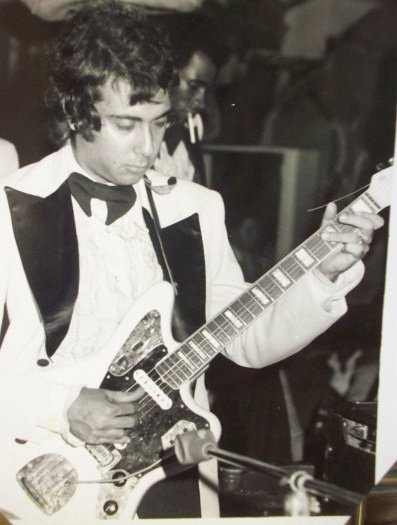
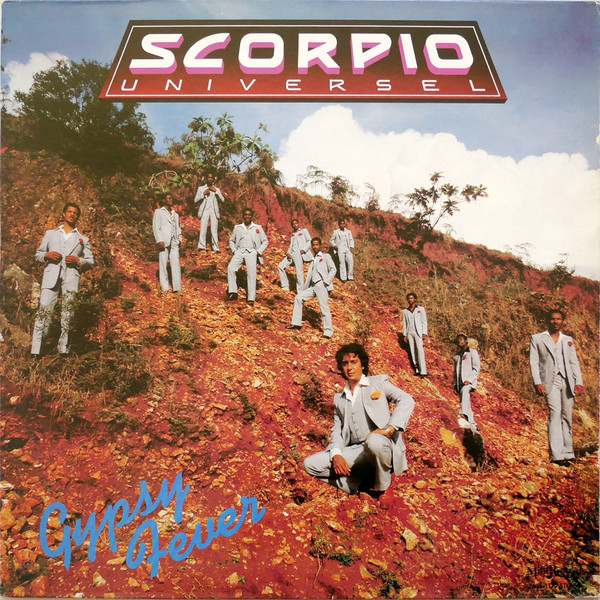
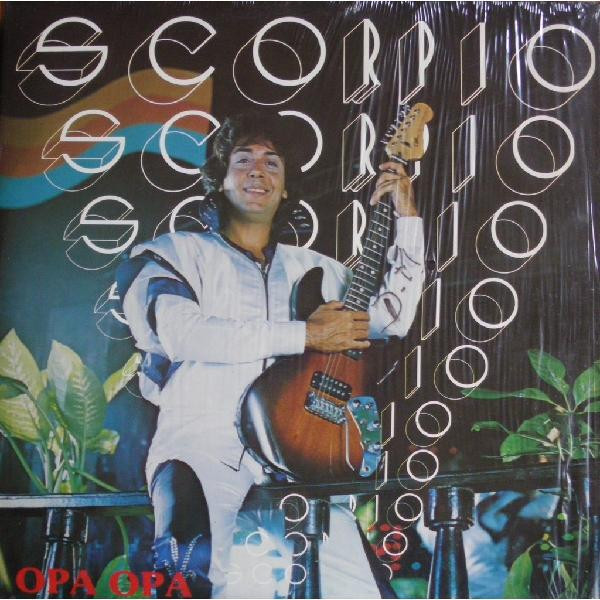
Scorpio Universel - 1978 - Album II
Zabranjeno Pušenje - 1985 - Dok čekaš sabah sa šejtanom
Paja Brava - 1977 - Herencia I
Friday, 25 August 2023
Rossy - 1989 - Madagascar
Sunday, 5 February 2023
Matteo Salvatore - 1973 - Le Quattro Stagioni del Gargano
Sunday, 4 December 2022
Gjurmët - 1984 - Gjurmët
Gjurmët (trans. The Traces) was a Yugoslav new wave band formed in Pristina. The band is notable for being one of the first Yugoslav rock bands formed by Kosovo Albanians and the first new wave band from SAP Kosovo. Gjurmët was formed and led by Migjen Kelmendi (vocals, rhythm guitar). The band released only one self-titled album before disbanding in 1986. The band made three one-off reunions, in 1988, 2015 and 2019.
The band was formed in 1980 by Migjen Kelmendi (vocals, rhythm guitar), the son of the writer and journalist Ramiz Kelmendi, inspired by the expansion of the Yugoslav new wave scene. The lineup also included Armando Gjini (piano, synthesizer), Tomor Kurshumliu (vocals, bass guitar), Gazmend Hasbahta (lead guitar), Petrit Riza (drums) and Bekim Dyla (lead guitar). During the same year, the band recorded their first song, being the first new wave song recorded in SAP Kosovo.
In 1982 the band recorded the song "Karrigat" ("Chair"), which Radio Television of Pristina refused to play due to its political-related lyrics. Afterwards the band recorded "Mikrofoni" ("Microphones"), which also had political lyrics but was accepted by Radio Television of Pristina. In 1984 Armando Gjini joined the band as the keyboardist. During the same year, the band recorded the material for their debut album, which was released the following year as a self-titled album. The reason for the delay was the controversial album cover, which featured dancers performing the traditional Albanian "eagle dance", making the shape of a double-headed eagle with their posture. Eventually, the album was released by Radio Television of Pristina, on compact cassette only, featuring the band's photo on the front cover; in the image, Kelmendi is looking at his wrist watch as a comment on the release delay. The album featured a combination of new wave, post-punk, reggae rock and folk music.In 1986, the band disbanded due to Migjen Kelmendi having been called for his mandatory service in the Yugoslav army. In 1988 the members of the band got back together, only to record one more song as a nod to their home city, "Heroi i Qytetit Pa Lum" ("Hero of the City without a River").Gjurmët LP, second album of the band Gjurmët released in 2002. Kelmendi became a journalist and was head of editing for the program Contacto on Radio Television of Pristina (1988-1990), executive producer of Victoria Television of New York (1996) and of the Programme Albanian Satellite (1997-1999), and director of television of Radio Television of Kosovo (2000-2001). He was also the founder of the weekly magazine Epoca (1991) and of the literary magazine MM (1996), and is currently editor of the weekly newspaper Java, which he founded in 2001. He has written four books, including To Change The World: A Short History of The Traces, about his musical career. Kurshumliu got a degree in economy and worked as a counselor in the Executive Council of Kosovo. During the 1989 abolition of the autonomy of the Province of Kosovo, he was fired from his job and moved to London. Riza got a degree in law and continued his career after the dissolution of Gjurmët as a drummer for the band Haliband. Dyla got a degree in architecture. After the rise of Slobodan Milošević to power, he moved to Switzerland, residing in Geneva and working as a designer. Gjini continued his musical career as a composer, and after Milošević's rise to power moved to Croatia.
In 2002, a compilation album LP, featuring a collection of material the band had recorded in the course of the 1980s, was released. The album upon release also featured Migjen Kelmendi's book Gjurmët LP. In 2022 the album was made available at the Internet Archive.
The band reunited in 2015 to perform a concert in Palace of Congresses in Tirana, Albania, on December 29. The concert featured several guest singers from Albania and Kosovo, including the rapper MC Kresha, who, the day before the concert, released the song "Era", recorded in collaboration with Gjurmët. After the 2015 reunion, Gjurmët reunited once again in 2019 and made a concert in the Palace of Youth and Sports in Pristina, on June 12. The money from the concert went to the Prenk Jakova School of Music in honor of its 70th anniversary. Gjurmët also received the Key of Pristina for the concert by the mayor of the city, Shpend Ahmeti.
TRACKLIST:
A1 Kur Dielli Perendon
A2 Ne Tren Për Perzeren
A3 Të Vallëzojmë
A4 Një Grusht Qershi
A5 Kënga Ime E Pakënduar
B1 Njeriu Dhe Kulla
B2 Rrezet Thehen Në Sytë E Tu Të Zez
B3 Era
B4 Të Shtrirë Mbi Kanape
Credits
Migjen Kelmendi – vocals, rhythm guitar
Armando Gjini – piano, synthesizer
Tomor Kurshumliu – vocals, bass guitar
Gazmend Hasbahta - lead guitar
Petrit Riza – drums
Bekim Dyla – lead guitar
Sunday, 16 October 2022
Myslovitz - 1999 - Miłość w czasach popkultury
Myslovitz is the most popular rock band to emerge from Poland in the late Nineties. They took the name from the city where they were born, Myslowice, making it the new capital of the local alternative scene. Guitarist and vocalist Artur Rojek started the band in 1992 as "The Freshmen", taking the initial name from the 1990 film The Freshman, starring Marlon Brando and Matthew Broderick, indicating a fascination with cinema that would become a characteristic feature throughout the band's career. In 1994 they changed their name to Myslovitz. The band's early phase was characterised by a somewhat debonair punk attitude, as Rojek admits:
"I started Myslovitz in 1992. I was twenty then and I had no idea how to make good music. Surely, I was a big fan of a few British groups (Ride, Stone Roses, My Bloody Valentine, Housemartins) but I couldn't play the guitar at all. After several months of rehearsals […] I decided that I should cover the holes in my musical education by […] chaos (the bigger the better)."
Even so, they soon caught the media's attention, winning several important competitions for young musicians. This enabled them to make their first professional recordings in the studio of Radio Lodz. In 1994, Myslovitz were signed by MJM Music Pl and recorded their self-titled debut album with British producer Ian Harris, who had previously worked for, amongst others, Joy Division, New Order, and The Exploited. Upon its release in 1995, the album received euphoric reviews and was declared "Debut of the Year" by several music magazines. Some critics compared it to Oasis, who were at the peak of their popularity at that time. In 1996, Myslovitz were joined by a third guitarist and keyboarder, Przemek Myszor, and released the second album Sun Machine on Sony Music Polska. The album spawned two somewhat beatlesque airplay hits - Z twarzą Marilyn Monroe ("With a Face Like...") and Peggy Brown, the latter being a cover version of a fellow Mysłowice rock band, with lyrics originally by the Irish "national bard" Turlough O'Carolan (in a translation by the Polish lyricist and translator Ernest Bryll).
The following year, the third album Z rozmyślań przy śniadaniu ("From meditations over breakfast") was released, displaying a tendency towards a more "polished" sound and more introspective lyrics. Also, Myslovitz's now typical fascination with cinema began to take centre stage with numerous allusions and hints in the lyrics and track titles, and a certain "cinematic" atmosphere in the music itself. The band's interest in cinema also showed in their contributions to soundtracks. In 1998, they recorded the unconventional track To nie był film ("That was no film") for the Polish movie Młode wilki ½ ("Young Wolves ½"). The lyrics referred to a wave of violent crimes committed by juvenile delinquents, which was controversially discussed in Polish mass media in the mid-1990s. The explicit depiction of violence in the lyrics and the accompanying video clip (which later won a Fryderyk award as "Video of the Year") caused further controversy and led Polish broadcasting networks to boycott both the song and the clip. Also in 1998, Myslovitz had their first appearances abroad with shows in Sweden, Germany, and the United States.The final breakthrough for the band came in 1999 with their fourth album entitled Miłość w czasach popkultury ("Love in The Time of Pop Culture"), which went platinum (i.e. 150,000 copies sold) soon and has by now achieved "double platinum" status in Poland. The single Długość dzwięku samotności ("[The Length of the] Sound of Solitude") became the biggest hit for the band so far. If "Miłość..." had been produced by an English band, today it would be considered a classic of the late Britpop era, as it contains some amazing songs. "Chłopcy" is introduced by a refined stratification of riffs and guitar effects, "Długość dźwięku samotności" is a touching love song with lounge-pop sounds, "Gdzieś" has some nice rhythm tricks and an explosive chorus, "My" is a softly depressive midtempo pierced by some subtle feedback noises, "Noc" is a celestial crescendo guided by acoustic guitars and percussions.
In 2000 Myslovitz again contributed to soundtracks, writing and recording the song Polowanie na wielbłąda ("Camel Hunting") for the movie The Big Animal (Duże zwierzę) by the legendary Polish actor and director Jerzy Stuhr, and the single plus another two (previously unreleased) tracks to director Waldemar Szarek's movie "That's Us" (To my). In 2003 Myslovitz continued their cooperation with Stuhr, creating not only the title song for his movie "Tomorrow's Weather", but also appearing in walk-on roles - as neophyte monks. In 2002, the follow-up to Miłość..., entitled Korova Milky Bar appeared; the title being an allusion to Stanley Kubrick's classic screen version of Anthony Burgess's A Clockwork Orange. Strikingly, the melancholic elements took over almost completely, with both music and (sometimes sarcastic) lyrics creating an overall downcast mood. Nonetheless, the album sold even more copies than its predecessor had in the same amount of time, with the singles Acidland and Sprzedawcy marzeń ("Dreamsellers") repeating the success of Długość... three years earlier.
The reason for the new material's popularity, as some critics surmised, was that its atmosphere closely conformed to a presumed resignative-recessive mood within Polish society at large - which guitarist Przemek Myszor seemed to confirm in an interview for the Montreal Mirror: "For us, the Korova Milky Bar [from Kubrick's 'A Clockwork Orange'] is a place where something different may happen to your mind. It's a place like today's Poland. You know, Poland is a place where very strange things happen to your mind. It's a country full of crisis and everything around you is very sad, very dark, very fucked. There is an economic crisis here. People don't have money, politics are fucked. The lyrics on our record are sad because of this. We sing a lot about being in a strange state of mind". With Korova Milky Bar, Myslovitz appeared at several festivals throughout Europe, including the big, traditional German festival for Alternative acts (Bizarre) and the prestigious Montreux Jazz Festival. Also, they supported Iggy Pop and the Simple Minds on their European tours that year. Also, they received an MTV Europe Music Awards in Barcelona for Best Polish Act, having been nominated twice in previous years. In November 2002 Myslovitz signed a new contract with EMI's Polish outlet Pomaton. The first album to be released on the new label was an English-language re-recording of Korova Milky Bar, which was released in 27 countries (including Germany, the Netherlands, Belgium, Switzerland, France, Spain, Russia, Turkey and South Africa). In addition to the Korova... material, this version also included English versions of older tracks. "Długość dzwięku samotności" now became a single as "The Sound of Solitude"' (an earlier English version, somewhat awkwardly but more correctly entitled "The Length of The Solitude Sound", had been a Polish b-side). A video clip for this song was directed Janusz Kamiński, the Polish Hollywood cinematographer who had won Academy Awards for Best Cinematography with Schindler's List and Saving Private Ryan, and had declined an offer from Martin Scorsese in order to work with Myslovitz. Kaminski declares himself a "fan" of Myslovitz, saying "I only work for Spielberg and Myslovitz [...] Money is not a factor in this. What one doesn't do for one's idols!" The clip got frequent plays on MTV Europe and the album received positive reviews in the European music press, particularly in Germany. However, radio airplay was sporadic and largely limited to Alternative programmes (such as John Peel in the UK), as a consequence, Myslovitz so far failed to enter the upper reaches of the charts outside Poland.Also in 2003, Myslovitz performed with Travis and Skin (of Skunk Anansie fame) on The Road to Edinburgh, where they received another MTV Europe Music Award for Best Polish Act. The same year, Sony Music domestically released an obligatory end-of-contract compilation album, entitled The Best of. The lead single Kraków was an older song re-recorded with 1970s Polish folk rock stars Marek Grechuta and Anawa. In the summer of 2004 Myslovitz were touring Europe again, starting with a concert for the German public radio and television broadcaster WDR on the eve of EU enlargement. Apart from headlining smaller venues and playing festival slots (including the largest Swiss open-air event in St. Gallen, they again opened for Iggy Pop & The Stooges on their European dates, as well as for The Corrs in the UK and mainland Europe. In December 2004, EMI released Myslovitz's most recent album entitled Skalary, mieczyki, neonki ("Angelfish, swordtails, neon tetras") - an out-of-schedule release with outtakes from the Korova Milky Bar recording sessions; longform, psychedelic-experimental and downbeat instrumental soundscapes took center stage. Skalary... earned Myslovitz comparisons to Radiohead and Pink Floyd. At the time, the band had finished recording of their new album Happiness Is Easy; it was released in May 2006. Myslovitz's success arguably contributed to a revitalisation of the Polish alternative rock scene in the late 1990s and early 2000s, which spawned bands such as eM, Kombajn do zbierania kur po wioskach, and Lili Marlene. In April 2012, frontman and co-founder Artur Rojek left the band after twenty years to pursue a solo career and continue work as creative director for the annual OFF Festival. Rojek was replaced by singer Michał Kowalonek, who left the band in 2018 (exactly six years to the day of Rojek's departure).
http://sovietsam.blogspot.com/2013/10/myslovitz-miosc-w-czasach-popkultury.html
TRACKLIST:
1. "Chłopcy" 3:58
2. "Nienawiść" 3:47
3. "Długość dźwięku samotności" 4:11
4. "Dla ciebie" 3:45
5. "Peggy Sue nie wyszła za mąż" 4:25
6. "Gdzieś" 4:31
7. "Kraków" 4:07
8. "Miłość w czasach popkultury" 3:12
9. "Noc" 5:53
10. "Alexander" 4:01
11. "My" 3:26
12. "Zamiana" 6:26
Credits:
Artur Rojek: Vocals, Guitar
Jacek Kuderski: Bass Guitar
Przemysław Myszor: Guitar
Wojciech Powaga: Guitar
Wojtek 'Lala' Kuderski: Percussion
Szymon "Sakhya" Potyński, Robert Laska : Design
Tomasz Rogula: Directed By
Grzegorz Piwkowski: Mastered By
Ryszard Horowitz, Rafał Latoszek: Photography By
Myslovitz, Tomasz Bonarowski: Producer [Produkcja]
Maitre Gazonga & L'International Challal - 1984 - Les Jaloux Saboteurs
Maitre Gazonga & L'International Challal - 1984 - Les Jaloux Saboteurs Born May 27, 1948 in Am-Timan, capital of the Salamat reg...
-
Maitre Gazonga & L'International Challal - 1984 - Les Jaloux Saboteurs Born May 27, 1948 in Am-Timan, capital of the Salamat reg...
-
Rossy - 1989 - Madagascar Paul Bert Rahasimanana (born 20 September 1960), better known as Rossy, is a Malagasy singer and songwriter...
-
Afro Sunshine - 1989 - This Is Afrika This was one of the first albums by a local group to go on sale in Botswana. During the 80s, Batswana...