Sunday, 28 August 2022

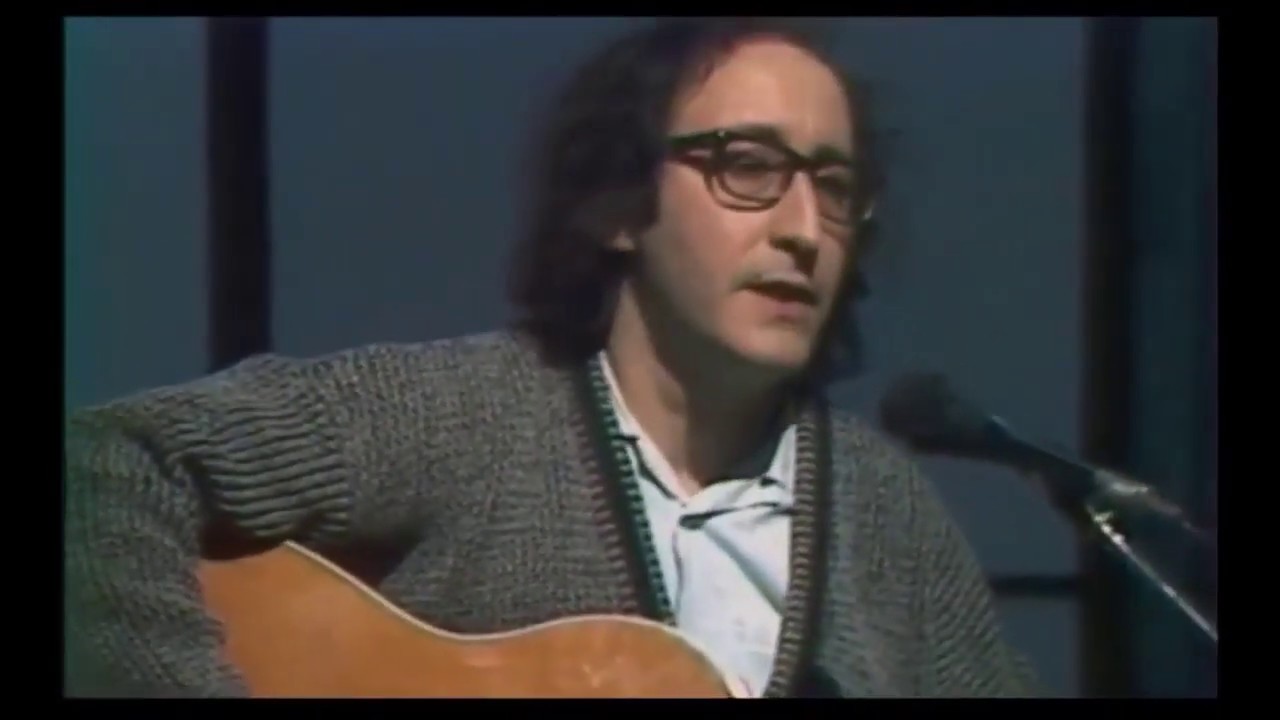
Harry Roesli - 1976 - Titik Api


Harry Roesli - 1976 - Titik Api


One of the most brilliant and original characters on the Indonesian scene, Djauhar Zaharsjah Fachruddin Roesli, better known as Harry Roesli, will make an infinite number of albums in the second half of the seventies that earn him the deserved epithet of Frank Zappa of Indonesia. More than in the music itself, the similarities between these two great artists can be found in the overwhelming creativity and originality and in the sarcastic approach in the lyrics and music. Among indonesian artists  Harry is one of the most authentically Indonesian and his music is the one that pays less debt with the West. This is why he could also be the most difficult artist to assimilate.

Roesli debut in 1973 with the release of the first and only Philosophy Gang record, a seminal record for the development of Indonesian prog but quite immature and which still paid debt to Western music. After the Philosophy Gang chapter, Harry begins a very long solo career, a bit discontinuous, but in which he will reach peaks of absolute excellence.


First, in 1973 he founded the Ken Arok theater company, carrying the musical work of the same name around until 1975, when he disbanded the company to go to Holland to study composition at the Rotterdam Conservatory. In 1976 the album "Ken Arok" was released, testimony of the homonymous musical work and manifesto of the poetics that will characterize his subsequent production. "Ken Arok" definitely breaks with the previous album, it is a real rock opera in Indonesian sauce. Elements of the Indonesian tradition begin to make their way into Roesli's music. Although still a little bit unripe, the result is surprising!


With the subsequent "Titik Api", in 1976, the definitive turning point takes place, Harry almost completely abandons Western stylistic features and begins an experiment in an attempt to blend traditional Indonesian pentatonic music with Western diatonic music (an approach that will be taken in ways other than Gurh Gipsy). Roesli and his band wonderfully combine Indonesian traditional music and their instruments with classic rock instruments: bass, guitars, drums and keyboards. In particular, the latter and how they naturally blend with the dynamics of gamelan, are the hallmark of the Indonesian artist's music. Older brother of "Ken Arok", the album "Titik Api" sublimates Roesli's poetics and becomes the absolute pinnacle of his discography and Indonesian prog in general. In “Titik Api”, unlike almost all the Indonesian prog albums of the period, there is no trace of bands like Genesis, Yes, Uriah Heep, Pink Floyd or other English prog groups; Roesli defines his style in a unique and original way as no one else has ever succeeded and will succeed in the musical panorama of the archipelago!

In addition to these two works, between '76 and '79, Harry will release an infinite number of albums: "Gadis Plastik" and "Tiga Bendera" ('77), "Jika Hari Tak Berangin", "Daun", "Ode To Ode "and" LTO "in '78 and" Kota Gelap "in '79. In addition, the two records resulting from the collaboration with the vocal ensemble Kharisma.

With "Tigra Bendera" we return a little more to Western music, but the result is still great. There are now references to Pink Floyd, Santana, ELP and especially Gentle Giant, with extensive use of the typical counterpoint of the English band. The following "Gadis Plastik" is a little less progressive and a little more pop, with funk and bluesy streaks, the latter due to the harmonica of his faithful collaborator Harry Pochang (former member of the Philosophy Gang). The 1978 records, albeit inferior, present interesting ideas, continuing along the lines of “Gadis Plastik”. An exception is the splendid EP "Daun" which is certainly the most progressive and not surprisingly published by SM. Between '77 and '78 the two collaborations with the vocal ensemble Kharisma (in which a very young Fariz RM also participates in the drums) also stand out, discs always poised between melodic and more experimental solutions and where in some points involuntarily recalling also the Magma. In particular, the second shows us the most experimental and ingenious Roesli that we had left in Titik Api and Ken Arok.

To close the golden cycle is "Kota Gelap", a disc, not exceptional, with more hard rock ideas that closes the most creative and prolific period of the Frank Zappa discography of Indonesia. He then definitively concentrated on his studies, returning to the land of Holland. He will then work for soundtracks, will engage politically and disseminate Indonesian music, but will no longer produce works up to this period. 

(http://www.arlequins.it/pagine/articoli/corporetro.asp?chi=78)


TRACKLIST:

A1 Sekar Jepun
A2 Merak
A3 Jangga Wareng
A4 Kebo Jiro
A5 Epilog
B1 Prolog
B2 Curah Hujan
B3 Dinding Tulang
B4 Semut
B5 Bunga Surga
B6 Lembe-Lembe
B7 Epilog

Credits:

Bass Guitar – Imang Wandi
Choir [Sinden Pengiring] – Etna (11), Kania, Lenny, Nike
Drums, Percussion – C. Rivet
Fiddle [Rebab] – Bapak Yoyo (track: A3)
Gong [Go'ong] – Entis
Harmonica, Acoustic Guitar, Percussion – Harry Potjang
Keyboards – Yohan Verplak
Keyboards, Electric Piano – Elva Hasbullah* (tracce: B4), Indra Rivai (track: B5)
Lead Guitar, Backing Vocals – Albert Warnerin
Lead Vocals, Lyrics By, Guitar, Keyboards – Harry Roesli
Other – Didi, Dudu, Susan Hobert
Trumpet [Tarompet Penca] – Iri Sutisna (track: A4)


Sunday, 7 August 2022

Idir - 1976 - A Vava Inouva

 Idir - 1976 - A Vava Inouva


Hamid Cheriet (Kabyle: Ḥamid Ceryat; 25 October 1945 – 2 May 2020), better known by his stage name Idir, was an Algerian Kabyle singer-songwriter and musician. Referred to as the "King of Amazigh music", he is regarded as one of the more significant modern day figures in Algerian and Amazigh culture, history, and struggle. Along with musicians like Ferhat Mehenni and Lounis Aït Menguellet, Idir helped popularize Kabylian folk music. Initially training to be a geologist, his interest for music was piqued when he was called to sing on state radio as a late substitute. After finishing his compulsory military service, he moved to France in 1975 and embarked on his career in music. Idir took a hiatus during the 1980s before returning in 1993. He was a passionate advocate of the Kabyle and Berber cultures.
Idir was born in Aït Lahcene, Aït Yenni, Tizi Ouzou Province (part of French Algeria at the time), on 25 October 1945.He originally studied to become a geologist and worked at an oil and gas field. In 1973, he was asked to be a late substitute for Nouara on Radio Algeria. He sang "A Vava Inouva", a lullaby that incorporated the "rich oral traditions" of his Berber culture. Although the song became popular, both in Algeria and abroad, Idir did not learn about this until after he finished his military conscription. In 1975, he left for France to begin working on his debut album, also titled A Vava Inouva. The title track was translated into seven languages and became a major success. Idir would later comment how "the song had chosen [him]". The song A Vava Inouva – inspired by a traditional story about a young girl trying to save her father from danger – carved out a new juncture at the intersection of several pathways. These included worldwide movements of decolonisation, revalorizations of cultural heritage, and new technologies like the cassette tape. Idir also sought recognition of his Tamazight language and Amazigh culture, in opposition to Algeria’s dominant Arabo-Islamic ideological orientation. 

These pathways came together in A Vava Inouva. It turned out that Idir’s return to the village was inspired by what he saw happening in the world. A Vava Inouva is built around the sung refrain of a story that grandmothers had long told throughout Kabylia. Idir set the well-known refrain between new verses penned by Ben Mohamed. In typical village scenes the grandmother spins her tale, surrounded by family members engaged in their own activities, snow falling softly outside. 
When the song hit the Algerian airwaves, it was electrifying: a friend reported seeing people walking backwards down an escalator to hear it playing over a store’s ground-floor speakers.
It was also the first Algerian song to play on French national radio, in 1975, coinciding with the first visit of a French president (Valéry Giscard d’Estaing) to Algeria since Algerian independence in 1962. From there, the song took off, reportedly selling some 200,000 copies by 1978. It would be translated into over a dozen languages and taken up by groups around the world.


After releasing the album Ay Arrac Nneɣ, he took a break from writing music throughout the 1980s. Idir re-entered the music industry in 1993 when he released the album Les Chasseurs de Lumières ("The Light Hunters"). He became known as an ardent advocate of the Kabyle and Berber cultures. In 1995, he performed together with fellow Berber Lounès Matoub, who was murdered three years later. His 1999 album, Identités, featured him singing with Manu Chao, Dan Ar Braz, Maxime Le Forestier, Gnawa Diffusion, Zebda, Gilles Servat, Geoffrey Oryema, and the Berber National Orchestra. It was ultimately a widespread success. Idir's release of the album La France des Couleurs ("France of Colors") coincided with the 2007 French presidential election, in which Idir championed multiculturalism and immigration. He released his final album, Ici et Ailleurs ("Here and Elsewhere") in 2017. The following year, he returned to his native Algeria after being away for 38 years, since 1980. He held a concert there in support of the Algerian protests that eventually led to the resignation of President Abdelaziz Bouteflika. Idir died on 2 May 2020 in Paris at age 70. He had been suffering from pulmonary fibrosis and was hospitalized two days before his death. News of his death was first announced on his official Facebook page, apparently posted by his children. A message of condolence conveyed by Abdelmadjid Tebboune, the President of Algeria, via Twitter praised Idir as "an icon of Algerian art" and stated that the country had "lost one of its monuments".

Idir participated in many concerts supporting different causes. For example, on 22 June 1995, more than 6,000 people attended a concert for peace, freedom, and tolerance performed by him and his friend, singer Khaled, initiators of the association "La France, la Vie" ("France and Life"). Idir also took part in the concert in memory of Lounès Matoub, the Kabyle singer who was assassinated in 1998. In 2001, Idir defended his national identity once again at "Le Zénith" in Paris at the "21st Berber Spring", a celebration of Berber culture. On 8 July that year, he organised a special fund-raising concert to support the population in Kabylie, at a time when anti-government riots were taking place in the predominantly-Berber region. Idir was joined by a number of stars and thousands of French fans who turned out to "Le Zénith" to support the population in Kabylie. In Algeria, Idir’s songs gave Kabyles a sense that their culture counted: that Amazigh customs and traditions were not backward or outmoded but could form a part of a modern Algerian nation. The songs helped lay the foundation for the widespread revalorisation of this heritage in later decades. At the same time, they created a sense of rootedness and a feeling of home for the many Algerians living in the diaspora.

(https://en.wikipedia.org/wiki/Idir_(singer))
(https://theconversation.com/idir-how-a-song-from-the-village-took-algerian-music-to-the-world-141418)


TRACKLIST (1976):

A1. A vava inou va4:25
A2. Alger2:10
A3. Cfiγ ou cfiɣ3:36
A4. Tamacahuţ n'tմe kurt3:55
A5. Zwiţ rwiţ3:25
A6. Muqueγ ou muqleɣ3:15
B1. Azwan2:55
B2. Ssendu4:10
B3. Ise fra4:05
B4. Rsed ay ides3:05
B5. Tagrawla3:05
B6. Tiγri bbwgdud2:20

Credits:

Directed By: Claude Dejacques
Engineer: Maurice Valensin
Photography By: Boccon-Gibod
Liner Notes: Amokrane

Drums: Dede Ceccarelli
Flute: Gérard Geoffroy
Guitar, Bass, Vocals: Omar Meguenni
Synthesizer: Jean Musy
Vocals, Guitar, Percussion: Idir

Wednesday, 3 August 2022

Si Lemhaf - 2012 - Kharej Mel 7it

 Si Lemhaf - 2012 - Kharej Mel 7it


Si Lemhaf is a tunisian musical and visual project created in 2009 by the electronic producers Mehdi and Mondher, both are born in Tunis and moved to Munich, Germany in 2004 to accomplish their studies and enlarge their knowledge and musical talent. The project consists of Si Lemhaf’s music itself and an extensive fictional universe depicting a real “Teddy Bear” as a mascot. LEMHAF is an old tunisian word and means “Smart, astucious, like a fox” .. later on,the word “Si” (means Mister) has been added to Lemhaf. Si Lemhaf = Mr. Smart , refers to the Teddy Bear. 

Mehdi, is Singer/Songwriter and composer.

Mondher is Guitarist,composer and plays percussions, and also affords the Live Backing Vocals.

Together they produce, mix and arrange their own releases. Moreover the LIVE BAND of Si Lemhaf has 4 other members:

Drums : Rami Ramirez

Lead Guitar : Aymen Scoola

Bass Guitar : Aymen Bach

DJ/Fx : Spi

Through combining elements of Synthie pop, Pop Rock, Electronic, Hip Hop and Dubstep with tunisian lyrics, posted in a form of appropriate and creative animation videos, Lemhaf gained in tunisia a large online following with their groundbreaking Facebook Fanpage. With the support of their excited fan base, they were able to quickly reach the presence of their music in all local Media in Tunisia. Their first breakthrough was with the song “Dephasé” in 2010, 6 months after the appearence of the “Si Lemhaf” project. 2 Albums have been released within the first 2 Years of the appearence ( “7ess” 2011 and “Kharej Mel 7it” 2012 )

In September 2011, after a serie of successful evocative songs posted during the tunisian revolution, the duo was invited to take part on a song on the initiative of the United Nations Development UNDP. The purpose of this song was to support the electoral process and to invite young people to mobilize for their future and get involved in the Tunisia of tomorrow. Beside the great performance, the song was composed and arranged by Mehdi and Mondher and has received great reviews and opened several new doors for them. December 2011, the band was chosen and assigned by the Coca Cola Company and SFBT group to write, compose and perform a song to support the tunisian national football team in its qualification during the 2012 CAF Africa Cup. The video to the hymn “Kharrej Legrinta Elli Fik” was shot in a mercurial atmosphere of tunisian football fans and with the friendly participation of several national team players having fun and singing with Si Lemhaf. The video posted on YouTube has reached over one million clicks within a few days, to be the worldwide most shared video in the social media networks for two weeks.

In 2012, Mehdi and Mondher joined the youth network Y-peer as embassadors from Tunisia. With it’s membership, the musicians will officially represent the network and promote the key themes among teenagers (which are responsible attitude towards their health, HIV/AIDS, how to protect themselves from drugs, say “no” and be able to resist peer pressure). In this context and on behalf of UNFPA, Si Lemhaf produced a song for Y-PEER “Hekayat Fi Bladi” with the collaboration of Karim Kamel (Egypt Embassador), Dani Dimitrovska (Macedonia Embassador). The song was recorded in July and filmed in November 2012 in Cairo, Egypt. Besides that, Si Lemhaf have worked on productions for other Artists like Phenix, Bendir Man and Sabri Mosbah . Late 2012 hey have participated as jury in a talent casting organized by DanUp. they choosed AZIZA as a winner and produced her first single “enjanna7 wentir” in collaboration with Bayrem Kilani, the song was released on 21.03.2013 and gone on top of the most played songs in the national Media.

March 2013, bad luck for the band, Mehdi had to deal with facial palsy illness for an indefinite time, they had to cancel their schedueled second live tour. However they had thereby much more opportunities to spend time in studios for experimentation and recording their third album “Ak7el wa7mer”. The duo is also credited with producing songs that are considered as “The birth of the tunisian Pop Music”, they were pioneers at bringing the electronic genre to the forefront of the tunisian culture .. and they intend to stay that way, positive and innovative !

(cit. http://si-lemhaf.com/)


TRACKLIST
1) Bel Fann 3:46
2) Ija M3ana 2:33
3) Gregorius 3:01
4) Thaoura 3:28
5) Bellar 3:43
6) Bent El 7ouma 2:39
7) Khouth Ra7tek 3:33
8) Digital Oxygen 2:21
9) Fok 3aad 2:18
10) Na3tik El ... 2:02
11) Zghir 2:55
12) Fla9 2:32
13) Ma Tkhallinich 4:40
14) Skyzophrenes 3:59
15) Ghneya Men Dammi 4:46
16) Nwa9ef El Wa9t 4:02
17) Felijti Bjanbi 2:53
18) Sa Ta3oud 3:56

Abdel Halim Hafez - 1971 - Mawood

 Abdel Halim Hafez - 1971 - Mawood


Abdel Halim Hafez, known as "The Nightingale", was an iconic Egyptian singer and actor. His immense popularity has inspired a religious-like devotion by many Egyptians who still celebrate him every year. He starred in some of the most memorable movies in the 1950s and 60s, the golden age of Egyptian cinema, including Dalila, the first color film in the Middle East.   Abdel Halim was not just a singer; he played several instruments, including the piano, oboe, guitar, and oud. His songs are known worldwide. In fact, you might recognize one of his melodies, “Khosara”, composed by Baligh Hamdy, which was sampled by Jay-Z in 1999 in his song "Big Pimpin," and resulted in a copyright lawsuit.

Abdel Halim was born in El Sharqia, north of Cairo. Both of his parents died while he was young, leaving him an orphan and impoverished. He also contracted a waterborne parasitic disease in childhood, bilharzia, causing health issues that plagued him his whole life. Despite his early difficulties, Adbel Halim's musical abilities became apparent from an early age, and his talent were carefully nurtured by his older brother. At 14, became formal training at the Arabic Music Institute in Cairo. Abdel Halim continued teaching music and singing in clubs until he was discovered by a radio executive in the early 1950s. Despite his fame, Abdel Halim's humble beginnings made him relatable to many Egyptians; a true man of the people. He was the voice of the revolution, in fact, his rise to fame coincided with Egypt’s 1952 revolution, and he sang many popular patriotic songs. His music inspired nationalistic pride and support for the leader of the revolution and future president, Gamal Abdel Nasser.  His songs were also sung in Tahrir Square during the 2011 Egyptian revolution. 

Throughout his career, Abdel Halim did not only sing songs for his beloved country, but he also performed uplifting music dedicated to countries like Lebanon, Syria, Tunisia, and Palestine, endearing him to the Arab people. Not only were his songs and films immensely popular, Abdel Halim's musical style greatly influenced Arab music. The lyrics of his songs and performance style focused on emotional impact rather than technical singing ability, preferring live performances over studio recordings.

Hafez funeral

Abdel Halim passed away at only 48 years old, due to complications from his chronic disease. All of the country was grieving and his monumental funeral engulfed the city of Cairo. However, this wasn’t the end for Abdel Halim. Just as his songs and movies were remembered and continued to be played throughout the country for generations, Abdel Halim’s legacy lived on...and grew. Today, Abdel Halim's loyal fans continue to visit his tomb every year on the anniversary of his death. Abdel Halim is remembered as more than a pop culture figure; he is greatly respected and venerated as one of the greatest Egyptian artists. There are even miracles attributed to him. This yearly pilgrimage is a testament to Abdel Halim’s powerful legacy, and importance to the people of Egypt and the Arab world as a boy who grew from poverty to become the voice of a newly-established nation.

"Mawood" from 1971 is the first long-form song of a legendary series, this is a milestone in his career. A majestic artwork which is able to break down any barrier, this can be appreciated by lovers of both ethnic and classical music, but also by the most demanding popular music listeners.


Credits:

Composed By: Baligh Hamdy (بليغ حمدي)

Lyrics By: Mohamed Hamza (محمد حمزة)


Sunday, 17 July 2022

Nasser el- Mizdawi [ناصر المزداوي] - 1997 - Raja'a [راجع] (Libya)

Nasser el- Mizdawi [ناصر المزداوي] - 1997 - Raja'a [راجع]   (Libya)


Nasser Al-Mezdawi (Arabic: ناصر المزداوي), (born 5 September 1950) is a Libyan singer, guitarist, songwriter and composer.
Mezdawi's first band Annusur, translates to The Eagles, released their first album "Ughniyat an Elghurba" in 1975 gaining instant popularity that rewarded them their first gold record. Mezdawi went on to participate in several international music festivals, giving concerts in Mexico, Cuba, USA, Portugal Malta and Greece. Nasser El Mezdawi is arguably the most popular artist that came out of Libya in the mid seventies. His work has been appreciated by the younger generation in urban North Africa and other Arab countries.
Much of his early work has been copied by other performers from the region, in fact, some very popular performers started out their careers, almost exclusively, covering his songs. This distinguished guitarist who survived trends, hype and persecution is one of few consistent composers, singers/songwriters that have put their mark, permanently, in the history of music in the region.
Darja, the Arabic dialect of North Africa, is the lyrical language of this sound. While the music is not necessarily Arabic, the rhythms are often mixtures of Berber, Arab, African and popular European. Artists usually reflect their diverse ethnic backgrounds through their own distinguishable work. The progressive sound remained local for the most part but Mezdawi's music broke into the international market through other Arab and European performers.
Nasser El Mezdawi is a pioneer in this form of music whom, many believe, is responsible for transforming the way young, urban Arab performers view and express their music today. 
"Raja'a" recorded in Egypt in 1997 is surely one of his best album, it is a new release of his first album "Ughniyat an El-Ghurba" (1975) with new instrumentation and a better production: a perfect mix of Arab and western pop with a delicate touch of smooth jazz atmosphere.
Nasser El Mezdawi is a pioneer in this form of music whom, many belie
(https://en.wikipedia.org/wiki/Nasser_el-Mizdawi)


TRACKLIST:
A1 خلي يقولوا
Arranged By –  Ashraf Mahorus
A2 مشينا
Arranged By – Ashraf Mahorus
Guest – Talaat Zein
A3 شنطة سفر
Arranged By – Ashraf Mahorus
A4 متغرب
Arranged By – Amr Abou Zekri
A5 رحلة عمري
Arranged By – Amr Abou Zekri
B1 يا مصر
Arranged By – Amr Abou Zekri
B2 لامن نشد عني
Arranged By – Ashraf Mahorus
B3 نجوم الليل
Arranged By – Amr Abou Zekri
B4 بدر البدور
Arranged By – Tareq Adel Madkour

Credits:
Bass Guitar – Ahmed Ragab
Brass – Magdī Baghdādi, Abdallah Ibrahim, 
Chorus – Yasser Shaaban, Sherif Tag, Iman Sarhan, Ahmad Haydar
Composed By, Lyrics By – Naser al-Mizdawi
Engineer – Nash'at Nasr El Din, Muḥammad Ṣaqr, Alaa El Kashef
Flute [Kavala] – Ibrahim Fathi
Guitar – Naser al-Mizdawi, Eamrw Murad,  Amr Tantawy, Ṭāriq Ḥamūda, Ashraf Mahrous
Guitar [Spanish Guitar] –  Sharif Mostafa
Kanun – Maged Serour
Oud – Ḥusayn Ṣabir Labīb
Percussion – Ḍiyā' Badr
Strings – Mounir Nasr al-Din

Saturday, 16 July 2022

Shlomo Artzi - 1979 - Ways

 Shlomo Artzi  - 1979 - Ways (דרכים - שלמה ארצי)


Shlomo Artzi (Hebrew: שלמה ארצי) is an Israeli folk rock musician, composer, music producer, radio broadcaster columnist and singer-songwriter. He was born on November 26, 1949, in Moshav Alonei Abba. In the course of his career, he has sold over 1.5 million albums, making him one of Israel's most successful male singers.
Artzi's parents were Holocaust survivors and their memories deeply influenced him and his sister Nava Semel, a playwright. His father, Yitzhak Artzi, a Zionist activist in Bukovina, Romania in his youth, was later a member of the Knesset. His maternal grandmother was the sister of Rabbi Meir Shapiro. When Artzi was eight years old, his family moved to northern Tel Aviv. Artzi's schoolmates thought he would become an actor, not a musician, as he was known for his acting skills at elementary school. However, at the age of twelve, he started playing the guitar and singing in a boy scouts group and at friends' parties.


At age 16, he began writing and composing songs. As the Sinai Duo, he started performing before soldiers, along with his classmate Rivka Menashe (now known as Riki Gal). During his military service, Artzi was recruited to the Artillery Corps, and after serving for a year and a half, he joined Lehakat Kheil Hayam (Naval Corps Entertainment Group). While in this band, he took part in the programs "And on the Third Day" and "Rhapsody in Blue", alongside other soon-to-be Israeli celebrities, such as Rivka Zohar, Dov Glickman, Avi Uriah, Riki Gal, and more. He was yet to stand out during the first program. By the second program, he became the lead singer and one of the main stars. He sang lead vocals on several songs on the Group's LPs.
In 1970, Artzi had the opportunity to take part in the Israel Song Festival, a prestigious song contest held every year. Still in military service and wearing a military uniform, he sang Pitom Achshav, Pitom Hayom (Suddenly Now, Suddenly Today),[1] also known as Ahavtiha (I loved her). The song, written by Tirza Atar and composed by Ya'akov Hollander, won first prize. It was included in his first album, Shlomo Artzi, which came out in 1970, and came in first in the annual chart-toppers countdown of Kol Israel. Artzi was voted Singer of the Year.
In 1975 he was selected to represent Israel in the Eurovision Song Contest. The selected song was At Ve'Ani (You and Me), written by the legendary Israeli songwriter Ehud Manor, and composed by Artzi himself. To seize the moment, Artzi's record label pressured him to record a completely new record in less than 2 weeks. However, At Va'Ani didn't win the contest, and the album was a big disappointment. This marked the beginning of the worst era of Artzi's career. During the next several years, Artzi released several records that failed to sell well, and produced very few hit singles. Later, most of these albums would become rare collectibles, as they were never released again. These include, among others, Miskhakey 26, Shlomo Artzi Shar U'Mesaper Al Ian HaGamad, Yesh Li Isha Yalda Ve'Lambreta Ve'Ani Gar Be'Tel-Aviv, Romansa U'Piyut, and a selection of his best songs from the period 1970–1973, which was released in 1976. 
(Shlomo at the Eurovision context)

In 1977, after a string of failures, he made "A Man Gets Lost" (גבר הולך לאיבוד, Gever Holekh Le'ibud). The album was sort of a last goodbye to the business. The success of this album persuaded Artzi to continue with his singing career, which rose throughout the 1980s and reached a peak with the release of the albums "Dance" (Tirkod) and "Restless Night" (לילה לא שקט, Layla Lo Shaket) which sold tens of thousands, and with the live shows that accompanied these albums, which would sell out the largest parks and theatres in Israel. His later album sales, in excess of a hundred thousand per album, and the live shows that followed each album, made him the most popular artist in Israel; Based on album sales and gross income from live shows, he is the most successful singer in Israel. Artzi has sold a total of over a million and a half albums, an unprecedented achievement in the Israeli music industry. He is well known for his marathon live shows, some of which last over two or even three hours. In 1979 he recorded his best album Ways (Drachim ), with a fresher style. Nine great songs, superbly arranged by Moshe Levi and Yair Shragai, mixing acoustic guitars, liquid electric guitars, jazzy basslines, and electric piano, with occasional violin and saxophone solos. Influenced by British art pop, Brazilian atmospheres (both from samba and bossa nova), Weast Coast vocal harmonies, and the local jazz and folk scenes, this album is nothing less than perfect. It sold 70.000 copies back in the days.
His 1981 LP Chatzot (Midnight) was the second part of Drachim. In 1980 Artzi started his own radio show on Israel's Military Radio station, Galey Tzahal. In this show, he talked about the week's headlines and tells interesting stories he has heard or seen during the week. Od Lo Shabat (It isn't Saturday yet) still broadcasts every Friday at 13:10 local time. His records Tirkod (Dance, 1984), "Layla Lo Shaket" (Restless Night, 1986), and Hom Yuli August (July August Heat, 1988), are milestones of Israeli 1980s songwriting. The albums sold in excess of a hundred thousand copies, an unprecedented achievement in the Israeli music industry, and the live shows that accompanied the albums would sell out even the largest parks and theatres in Israel.
In 1992 Artzi released Yareakh (Hebrew: ירח, Moon), one of his most successful albums. Out of twelve songs on it, eight became radio hits and finally solidified Artzi's status in Israeli popular music. In 1995 popular Israeli musicians recorded a CD together in memory of Yitzhak Rabin, named Shalom Chaver. Shlomo Artzi played two songs during the memorial service, which later became anthems of those days – Haish Ha'hu (That Man) and Uf Gozal (Fly Little One), which was originally written and recorded by Arik Einstein and Miki Gavrielov.
In 1996 Artzi released a double album called Shnayim ("Two"), which has sold an almost unprecedented 160,000 copies, making it a certified 4× platinum record. The most notable songs in this CD were the title track, sung with Israeli singer Rita, "Hi Lo Yoda'at Ma Over Alay" ("She Doesn't Know What I'm Going Through"), '"Menagev Lach Et Hadmaot" ("Wiping the Tears For You") "Ze Ma Shenish'ar" ("That's What's Left"), "Ha'ahava Hayeshana" ("The Old Love"), "Le'an, Le'an, Le'an" ("Where, Where, Where"), "Shisha" ("Six"), "Absurd" and "Dokh Retzhakh" ("Murder Report") which reflected on the tragedy of Prime Minister Yitzhak Rabin's assassination and revolved it around another similar tragedy, that of JFK's assassination. Shnayim signaled the beginning of a string of ultra-popular albums of original material from Artzi, which are some of the best-selling Israeli records of all time.

In 2000 Artzi released "Ahavtihem" ("I Have Loved Them"), a collection of reworked love songs, many of which were originally written by him for other artists. The album featured many smash hits, including the tender revision of his past hit "Ahavtia" ("I Have Loved Her"), "Nof Yaldoot" ("Childhood's View"), "Anakhnu Lo Tzrikhim" ("We Don't Need"), "At Va'ani" ("You and Me"), "Ma'avir Duff" ("Turning the Page") – a duet with Nurit Galron (which performed the song originally), "Shir Preda" ("A Goodbye Song") – a duet with his singer-songwriter son, Ben Artzi and "Melekh ha'olam" ("King of the World", a Hebrew translated cover of White Plains' "When You Are a King"). The album went on to sell over 200,000 copies – an unprecedented achievement in the little Israeli music market.
Artzi's next original album, "Tzima'on" ("Thirst"), which was released in 2002, featured the title track as its lead single, as well as the more memorable "Al-Pi Tnuat Harakavot" ("According to the Trains' Movement) LeHatzil Otakh ("To Save You") and "Ptzatzat Atom Bashamaim" ("Atom Bomb in the Sky"). The albums were an instant smash hit, selling over 60,000 copies (3× gold record) on the first two weeks of their release and continued the enormous success of their predecessors, yet they were met with harsh reviews, some of which noted the inadequate abundance of quality material. Artzi would later admit of the albums' weakness in select few interviews.
In 2007 Artzi released his highly anticipated follow-up album, "Shfuim" ("Sane"). The album came out in July, with a lead single "Ha'amiti" ("The Real") which was received with by-now standard heavy radio rotation. The album generated several more radio singles to help push it, yet they repeatedly failed to make a lasting impression on fans. The colorless clutter of "Iceland" and the disappointingly stale and un-melodic collaboration with Mooke (of the breakthrough Rap-Rock band Shabak Samekh), "Hakhaim" ("Life"), hinted of waning creativity of the nation's favorite singer-songwriter. Fourth single finally managed to get a hook across and join Artzi's rich back catalog with pride: "Nitzmadnu" ("We Clinged"), enjoying a catchy sing-along melodic line and an interesting lyric, sharing private memories and reflecting on, among other topics, television's role inside a modern family and on Prime Minister Yitzhak Rabin's Assassination (a recurring subject in Artzi's songs). Finally came out one of Artzi's biggest, most enduring and most memorable songs of recent years, "TeTa'aru Lakhem" ("Imagine Yourselves"), which features one of the best-known, most beloved lines in Artzi song catalog, equipped with a tender, infectious, eternally romantic message: "Imagine yourselves a beautiful world, a little less sad than it actually is, and there we are, walking, with sunshine in our pockets". The song is still a major live-show staple and highlight.
In 2012 Artzi finally released a yet-again highly anticipated album of original songs: "Osher Express" ("Happiness Express"). This time around, though, the album enjoyed critical acclaim and commercial success. It featured a very strong collection of new songs, a slew of beloved singles and an intriguing, immediately classic lead-off single: "Khozrim Habaita" ("Coming Home") which featured the ultra-popular, rarely seen on public, iconic Israeli singer Arik Einstein. The album kept shooting off powerful material and rapidly so. Quite quickly came the similarly addictive "Kol Yom" ("Every Day"), the life-affirming duet with Dudu Tasa "Latet Velakakhat" ("Negotiating"), and the spiritual duet with Abraham Tal "Elohim" ("God"). Additional singles came in the form of "Nedaber Mehalev" ("We'll Talk Whole-Heartedly") and "Shelo Yealmu Hadvarim Hayafim" ("Wish That The Beautiful Things Won't Disappear"). Album gems also included the heartfelt and captivating title track, the part-playful, part heart-on-sleeve honesty of "Ometz" ("Courage"), the epic escapism obsession tackle of "Florida", and Artzi's unique narration on the wave of social protests that hit Tel Aviv in 2012, "Kaitz Be'eretz Lu" ("Summer in If-Land").In 2016, Artzi released a new album: "Katzefet" (cream).

TRACKLIST:
A1 אף פעם לא תדעי
A2 צוותא
A3 אחרי הכל את שיר
A4 אתמול חלפו הצפורים 
Written By – Moshe Ben Shaul
B1 שינויי מזג האויר
Music by: Jean Luc Ponty, Arranged By – Dedi Shlezinger, Yair Shragai
B2 פתאום כשלא באת
Performer – Gary Eckstein
B3 אני שומע שוב
Written By – Nimrod Gaon
B4 עפיפונים
B5 דרכים
Arranged By – Moshe Levi, Shlomo Artzi

Credits: 
Arranged By – Moshe Levi (tracce: 1, 3, 6, 8), Yair Shragai (tracce: 2, 4, 7)
Drums [Uncredited] – Alon Hilel, Jean Paul Zimbris
Engineer – Yaakov Moreno
Guitar [Uncredited] – Gary Eckstein, Haim Kario
Keyboards [Uncredited] – Alona Turel, Dedi Shlezinger
Producer – Shlomo Artzi, Yair Shragai
Saxophone [Uncredited] – Meir Shpaizer
Violin [Uncredited] – Tony Brower
Vocals – Shlomo Artzi
Written-By – Shlomo Artzi


Tuesday, 12 July 2022

El Último De La Fila - 1986 - Enemigos de lo ajeno

 El Último De La Fila - 1986 - Enemigos de lo ajeno


El Último de la Fila was a successful Spanish rock group based in Barcelona, Spain. Formed in 1985 by Manolo García and Quimi Portet, the group released a total of 7 full-length albums before disbanding in early 1998. Manolo García was the singer in a group called Los Rápidos (The Rapids) and Quimi Portet had created a group named Kul de Mandril (Mandrill Buttocks). They started playing together in Los Burros (The Donkeys) in 1984. Then around 1985 they decided to form El Último de la Fila, becoming one of the most successful Spanish groups of the 1980s and 1990s, touring throughout Spain and Latin America.


They were ranked number 1 on Rolling Stone's "50 Greatest Spanish rock bands".

In 1985, the two frontmen for the short-lived band, Los Burros ‒ Manolo García and Quimi Portet ‒ formed the group, El Último de la Fila. After signing with independent music label, PDI, they released their first full-length album in February 1985 entitled Cuando la pobreza entra por la puerta, el amor salta por la ventana. In 1986, the band released their follow-up album, Enemigos de lo ajeno, with the track, "Insurrección", being chosen as "Best Song of the Year" by Rock de Lux magazine. Enemigos de lo ajeno achieved the first Gold record, due to sales in excess of fifty thousand, for the band. 


“Enemigos de lo Ajeno” (PDI, 1986) has gone down in history as one of the best albums in the history of rock sung in Spanish. They achieve a balanced and very personal ensemble of miscegenation and musical bastardy that looks east and west, north and south and is charged with a Mediterranean breeze. The pop-rock songs use electronic elements when they are necessary, and the atmospheres are recreated from Arabic and Flemish references. achieved with a smaller team of musicians than the one they had on their debut. The lyrics are especially applauded, with excellent images such as “M i patria en mis zapatos, mis manos son mi ejército ” that they recite in “ My country in my shoes” or others as poetic as in “ Angels have no propellers ”: “ Like silver hooks your fingers are stuck in my body / and your laughter is spent between my fiery kisses; / smell of something that does not exist / of love, that perhaps never existed ”

1987 saw the release of the group's third album, Nuevas mezclas ‒ recorded on a larger budget with improved sound quality ‒ followed by 1988's Como la cabeza al sombrero which sold more than 400,000 copies. The band began performing at larger and larger concert venues throughout Europe and South America, including the September 1988 Amnesty International Human Rights Now! concert in Barcelona, along with Bruce Springsteen, Sting, Peter Gabriel, Tracy Chapman, and Youssou N'Dour.  From 1988 to 1990, the group continued touring throughout Europe and the Americas including stops in Mexico, the United States, Colombia, Argentina, and Venezuela. 


In 1990, the band released their fifth album, Nuevo pequeño catálogo de seres y estares, which reached #1 on the AFYVE sales chart. The group also founded their own music company, Perro Records. After another extensive tour throughout Spain, Europe, and South America, the group issued its sixth album, Astronomía razonable, in 1993 which became the first album by a Spanish group to stay at #1 on the AFYVE sales chart for 10 or more weeks. The disc also went gold in Venezuela and Mexico. The group promoted the album with a new international tour which included scenography designed by the Els Comediants theater group. In 1995, the band released their seventh and final album, La rebelión de los hombres rana, and again toured internationally in collaboration with Els Comediants. The concerts included tracks from the group's entire history including songs from the Los Rápidos and Los Burros eras. On 13 January 1998, El Último de la Fila announced their breakup so that the group's two founding members, Manolo García and Quimi Portet, would each separately pursue solo careers.


TRACKLIST:

1. Lejos de las leyes de los hombres (M. García, Q. Portet) 3:22

2. Insurrección (M. García, Q. Portet) 2:12

3. Mi patria en mis zapatos (M. García, Q. Portet) 4:22

4. Aviones plateados (M. García, Q. Portet) 3:52

5. Zorro veloz (M. García, Q. Portet) 4:14

6. Las palabras son cansancio (S. Alpers, M. García, Q. Portet) 3:50

7. Soy un accidente (M. García, Q. Portet) 3:22

8. Los ángeles no tienen hélices (M. García, Q. Portet) 3:40

9. No me acostumbro (Q. Portet) 4:20

10. ¿Para qué sirve una hormiga?» M. García, Q. Portet) 2:29


Credits

Angel Celada: Drums

Jose Luis Perez: Electric Guitar

Quimi Portet: Electric Guitar, Bass Guitar, Acoustic Guitar, Keyboards, Harmonica

Manolo García: Vocals, Keyboards, Tambourine

Marc Grau: Guitar [Spanish]

José Llobell: Engineer

Marc Neuhaus: Engineer

Rafael Moll: Producer 


Maitre Gazonga & L'International Challal - 1984 - Les Jaloux Saboteurs

Maitre Gazonga & L'International Challal - 1984 - Les Jaloux Saboteurs     Born May 27, 1948 in Am-Timan, capital of the Salamat reg...